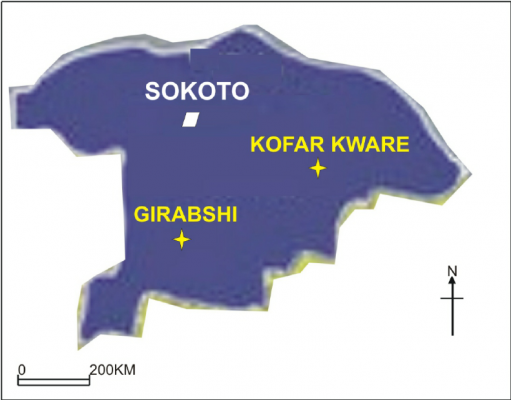

No fewer than 25 persons have been confirmed dead in Sokoto as a result of a Cholera outbreak in three Local Government Areas of the state out of a total of 1,160 cases recorded in the state.
The state Commissioner of Health, Asabe Balarabe, disclosed this on Monday while speaking to newsmen.
The commissioner further explained that the state is treating 15 other victims of the outbreak on active cases from Sokoto North, Silame and Kware local government areas.
According to him, the 15 active cases were diagnosed through laboratory tests based on culture and sensitivity and confirmed to be active cases of the cholera outbreak.
She stated further that, ”Out of 1,160 people that have been affected by the outbreak, 25 of the victims have already succumbed to the disease.
LASG revokes unoccupied housing units
“The stated rescue teams are collaborating with the state government to manage and forestall further spread of the dreaded disease.
“The state government, in its response to the outbreak, directed the immediate purchase and distribution of drugs free of charge to 18 local government areas to curtail the disease’s continued spread.”
The commissioner appreciated the turnout of women, especially pregnant women, seeking medical consultations and pregnancy tests at various health institutions in the state.
She highlighted challenges facing the health sector, including dilapidated infrastructure and inadequate resources, which have plagued the sector backwards for the past eight years.
She however expressed hope that Governor Ahmad Aliyu, in his magnanimity, would see to the revitalization of the health sector in the state.
“Patients often face numerous problems in public health institutions, such as atrocities, loud disturbances, lack of water, and power outages,” she lamented.
Also Read:Public health experts, faculty hail kwara gov’s investments in sector
Isaac Adewole: The Golden Years of A Working
LASG revokes unoccupied housing units
Balarabe also lauded the governor for recruiting 864 nurses and midwives to address the issue of a shortage of manpower in state public health facilities.
She added that plans are in the pipeline to recruit more supporting staff to replace the dead and those who retired without replacement.