
Abiola Ayankunbi
In view of the fragile economy coupled with the high rate of insecurity, media managers need to set agenda for the government before the entire system is collapsed. The resultant effect of agenda setting will make all and sundry to become the beneficiaries.
Historically, some newspapers have had a particular editorial bent, leaning in one political direction or another. In some larger communities, there might be two or more newspapers, each with a strong affiliation with a particular political party or set of political ideals. Readers could then choose the newspaper that they wished to read based on their own interests. Different media have different agenda setting potential.
Journalists typically strive to maintain objectivity i.e presenting a story without bias. Readers can still choose from among many different media outlets, and there are still often distinct differences in the ways in which different newspapers present news about the same issues.
Agenda setting is the ability of the news media to influence the salience of topics on the public agenda. Agenda attempts to make predictions and if a news item is covered frequently and prominently, the audience will regard the issue as more important.
Agenda setting is the creation of public awareness and concern of salient issues by the news media. As well, agenda setting describes the way that media attempts to influence readers, and establish a hierarchy of news prevalence.
Media influence policymakers when government officials and politicians take the amount of media attention given to an issue as indirect expression of public interest in the issue. The agenda building perspective ascribes importance not only to mass media and policymakers, but also to social process, to mutually interdependent relation between the concerns generated in social environment and the vitality of governmental process.
Media provides focus and environment for reporting a story, influencing how audiences will understand or evaluate it. The media may report that: a political candidate has extreme views on an issue or a budget proposal is harmful to a particular group or a new medicine is of questionable safety, and so on. By such reporting, the media has presented a frame through which the story is interpreted by audiences. It also sets the baseline for future reporting on the issue.
Journalists remain the faces of media organisations because they provide contents for public consumption. Although, another dimension has crept into the ways in which news are being served the public because some journalists are “faking or planting” news in the newspapers. Some journalists are deliberately distorting news items, thereby leading to publication of corrigendum every other day.
For example, the Nigerian Tribune, a newspaper owned by the family of late Nigerian political sage, Chief Oyeniyi Jeremiah Obafemi Awolowo, fired a Senior Reporter, Olakunle Timothy Taiwo, for concocting an interview with Professor Itse Sagay, a constitutional lawyer, and scholar. The purported interview was published on Sunday, December 21, 2015.
Equally, on Sunday, April 10, 2016, Sunday Punch published an interview purportedly granted by the former President of Christian Association of Nigeria (CAN), Pastor Ayo Oritsejafor which the latter denied. The “interview” was conducted by Nosa Akenzua.
The list is endless and it is not good for the profession. It is because of the personalities involved in the above scenarios that made the concerned media houses treat the case with an automatic dispatch. Other cases were treated with levity or mere retraction without serious sanctions. There is an affinity between a largely corrupt media organisations and inability to pay salaries, remit deducted taxes, cooperative/pension contributions and meeting other contractual obligations to her workers.
Politicians covet media friendship, business owners want to be in the media good books while those in government recognise that media managers can make or mar their administration. That is the way it should be. After all, media owners to a large extent, determine what the public read and hear to a reasonable extent.
In conclusion, media is expected to play a pivotal role in putting the government on its toes by holding the officials accountable through unbiased reports of the happenings in the country. Media needs to ensure that everybody is equal before the law and all issues are treated based on rule of law no matter who is involved. Media practitioners however need to practice with highest level of professionalism.
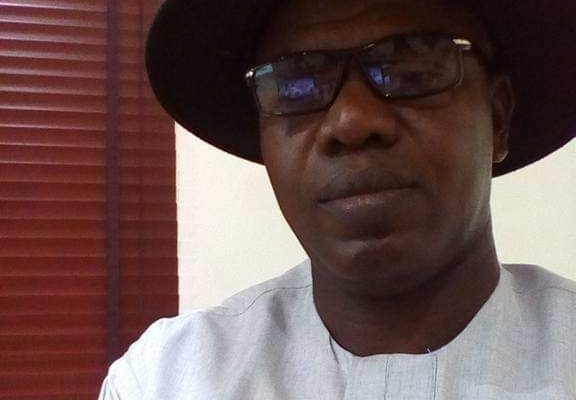
………… Ayankunbi is MD/CEO at AbingMO3 Marketing Management Consultancy
abiolaayankunbi@yahoo.com
0802 305 1315