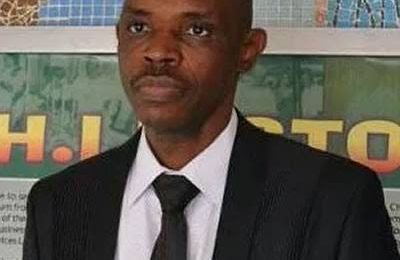

Debo Adeniran, human rights activist and social crusader, is one person whose name resonates anywhere anti-corruption issues are mentioned in Nigeria. Bold, versatile and courageous, the chairman of the Lagos-based Centre for Anti-Corruption and Open Leadership, a non-governmental organization has zero tolerance for graft and bad leadership. This advocate of good governance spoke to New Dawn on the level of corruption in the country, its consequences and the current fight against this evil by the present administration. Excerpts:
It is generally believed that corruption is the major problem confronting us as a nation; how do you react to this?
Well, thank you very much. The problem of corruption is not peculiar to Nigeria; it is a global problem. It is just the way each country tackle the monstrous problem corruption has become all over the world that differs. Some tackle it frontally, like the Asian countries. In several Asian countries, they confront it frontally, eyeball to eyeball, with a view to defeating it and to a large extent, they have defeated it despite the fact that officially, they themselves are perpetrating some form of corruption or the other against the global community in the way they conduct their economic affairs, in their commerce, in their trade, their international relations. So, all of that in their foreign policies, they exploit those vulnerable countries, especially in Africa. So, all of this makes it a global thing, but the way it occurs, you cannot say America has defeated corruption, corruption is perpetrated in both low and high places too; but if they catch those perpetrating corruption, they don’t spare the rod. That is why everybody thinks that the laws that are meant against such vices are implemented.
And because the citizenry in those countries know that these laws are still implemented because they know that the punitive measures will be taken against them, because the law of the land in America, in Europe or everywhere will apply; that is why we don’t get to hear so much about the pervasiveness of the practice of corruption in those other countries.
When you come to sub-Sahara Africa, Africa generally is being taunted to be the home continent of corruption. One, because we don’t have what it takes to suppress global reportage of events that are going on in Africa. Two, because international politics is meant to overwhelm the weaker nations, especially the third world; so that we may be frustrated out of aspiring to go into the second world or the first world countries. Those who are up there, they don’t want the upcoming ones to get to the same level as them. That is why when you hear information from America, sometimes they blow hot, sometimes they blow cold, sometimes they don’t even take any position on what is going on and sometimes they take positions that support the ruling authority; sometimes they support the opposition or even, both sides, playing the ostrich. So, we cannot allow those western countries to determine our destiny in Africa. However, corruption is endemic in Africa generally and Nigeria in particular, the reason is that for so long, people did a lot of cover-ups; most of the perpetrated acts of corruption are not made known to the public.
The media do not have Freedom of Information Act, and even when they have, there is a limit to what they can do, just a slight difference to when they didn’t have the Act. Many media practitioners do not have the courage to engage in thorough investigative journalism. So, they are satisfied with the snippets they get from public officials and their aides. That is why we don’t get much. They don’t have what it takes – no equipment, many of them are badly trained, many are not courageous enough and many of those that are courageous enough are silenced. Look at how Dele Giwa, former editor of Newswatch magazine died; it became a scare giver to the aspiring and upcoming investigative journalists that if this guy could be killed this way through a parcel bomb, they also could be shot dead. And a couple of others like when Nduka Irhabor and Tunde Thompson were sentenced to prison terms for because they reported what was true, but the state thought it was supposed to be a classified material that they shouldn’t have done. There was the case of Bagauda Kaltho and a host of others and those that are still alive like Niran Malaolu that was detained, tortured and almost maimed in the course of carrying out his professional duties.
All these have made it easy for the state to suppress information from the glare of the populace. So, when you don’t have information, you don’t know how endemic the problem is.
Does the present administration take cognizance of the enumerated challenges in its anti-corruption drive?
Yes, these days, I think there are a number of legal instruments that make it impossible for people to keep corruption information for so long and so neatly that escape the eagle eye of investigative journalists; and even the authorities themselves don’t seem to care a hoot what information comes to the public domain or which ones are actually hidden. As a matter of fact, they don’t seem to give room for secrecy in government. That is why, the corruption perception index of Transparency International can be bloated because once they have corruption information, it would look as if corruption issues are going skyward, even instruments have been put in place to stop it. Really, the present administration has put on the ground, a number of safeguards that will prevent corruption because the best way to fight corruption is to prevent it, not to allow people to commit these crimes before they are nipped in the bud. That is being proactive, and some of the proactive measures include operationalization of the instruments, legal instruments that have been put in place by the previous administration like the bank verification number (BVN) which will harmonize all transactions; whatever deposits a citizen have in all the banks because you are using the same BVN. So, you can can’t hide that some money does not belong to you, you can’t deny that you own the money, except you are not the one running it.
Then, there is a treasury single account (TSA) which makes it impossible for MDAs and ministries to create separate accounts. So basically, those are the two major instruments that have prevented corruption from happening. When you look at the agencies themselves, they are given better impetus than hitherto; that is the anti-corruption agencies like the Economic and Financial Crimes Commission (EFCC) and Independent Corrupt Practices Commission (ICPC). Even, the administration itself has a kind of body language that scares those who would want to perpetuate corruption, even if they have not been able to bring all those that are eligible for trial to trial. But they have been able to instill fear in the mind of public servants that if they commit corruption, they are likely to be caught. That is another means of preventing corruption; those that are caught are not spared. For instance, the TSA and BVN, that is why people don’t have a safe haven in financial institutions to keep proceeds of corruption. Like if somebody stole so much money, he can’t take it to any financial institution because the financial institutions will be culpable if they accept such money without asking for the source of such resources. That was why people abandoned money in shops, airports and several other places including Ikoyi Towers and several others because they can’t take it to the banks, insurance companies or buy property with it because every major property that is bought has to be reported to Special Control Unit against Money Laundering (SCUML), and if you look at the way this body works, they are resident in EFCC.
SCUML must know such transactions. Any transaction that is more than N5m by a corporate org or N1m by an individual should be reported to SCUML, not to talk of NFIIU now residing with the Central Bank of Nigeria (CBN). Any transaction that is more than N5m by an organization or N1m for an individual will be reported to the CBN through the Financial Control Unit (FCU) where EFCC and other anti-corruption agencies can obtain information about such deposits.
There is also this a unit called Anti-Corruption and Transparency Unit (ACTU) set up by ICPC in all MDAs to ensure that procurement and financial transactions will pass through ACTU so as to have a record of what is coming in and going out in all the MDAs. So, all these are safeguards. When you get to the CBN, there is FRCU; so, whatever money that is moving inter-bank transactions are controlled, monitored and accessed by the CBN. All these make it difficult for corruption to go freely, to happen freely without being noticed; and if any of the officials of these agencies neglect to do his own bit, and any network of corruption is perfected, they will be culpable and treated as accomplices in such crimes.
To be continued…